
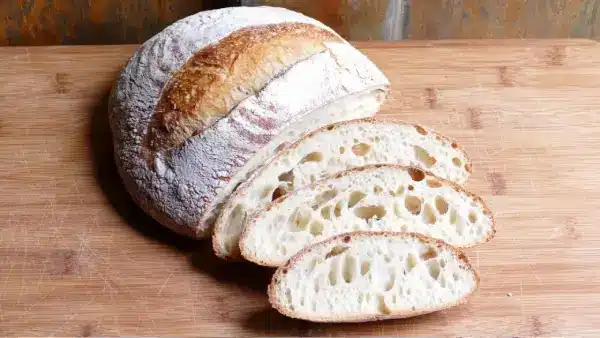
How to Reheat Sourdough Bread Without Drying It Out
The Best Way to Reheat Sourdough Bread:
- Preheat your kitchen oven to 325°F (160°C).
- Lightly mist the outer crust with a bit of tap water.
- Wrap the loaf completely in heavy aluminum foil.
- Bake for 15 to 20 minutes until warmed all the way through.
- Remove the foil and bake for 5 more minutes to crisp the crust.
The Secret to Perfectly Warm Sourdough
We see it happen almost every weekend at the bakery. Customers pick up a beautiful, crackling artisan loaf on Saturday morning. They enjoy a few amazing slices with dinner. But by Sunday morning, they try to warm up the leftovers and things go completely wrong.
We have all felt the disappointment of cutting into a dense, dried-out loaf. Most people just guess at how to fix it. They toss a slice in the microwave, which turns the crumb into a chewy rubber tire. Or they throw the whole thing directly onto a hot oven rack, turning the bread into a literal brick. Neither option does justice to the food.
Professional bakers handle day-old bread much differently. The secret simply comes down to managing moisture. In this breakdown, we will show you our exact shop methods for bringing that fresh-baked magic back to your kitchen counter. We know firsthand that maintaining a healthy sourdough starter takes serious dedication and patience. Respect your hard work by properly warming up the finished baked product. But with the appropriate approach, second-day slices can taste just as delicious as a new bake.
Why Sourdough Dries Out Over Time
To solve the problem we need to know how bread turns stale in the first place. This is a natural chemical reaction and is called starch retrogradation. In the heated oven the starches in the dough will take in moisture and swell. This gives the baked bread its soft, bouncy center.
Once the loaf cools down on your counter, those cooked starches begin to recrystallize. They tighten up and actively push moisture outward toward the crust. This internal shift leaves the inside crumbly and dry, while the outer crust absorbs that migrating moisture and gets tough and leathery.
The water hasn’t vanished into thin air. It just moved to the wrong spot. Reheating bread correctly reverses this process. By applying gentle heat and a little external hydration, we break those starch crystals back down. This action forces moisture back into the center, reviving the soft crumb and giving you back that crispy exterior.
The Best Way to Reheat a Whole Sourdough Loaf
If you are dealing with an entire loaf or a large half-loaf, the regular kitchen oven works best. It provides the steady, ambient heat needed to warm a dense center safely without burning the outside edges.
Step-by-Step Oven Method
Getting bakery-level results at home requires a simple mix of steam and protected heat. Follow these exact steps for the best possible outcome.
First, you need to wet the crust. Run your hands under the sink tap and lightly pat the outside of the crust. You can also use a clean spray bottle to mist it. You want the surface slightly damp, not soaking wet. Focus your water on the top and sides while keeping the bottom crust mostly dry so it does not get soggy.
Next, wrap the dampened bread tightly in heavy-duty aluminum foil. Ensure there are no gaps where air can escape. This foil acts like a miniature steam room. It traps the moisture you just added, forcing it deep into the stale crumb as the bread warms up.
Preheat your oven to a gentle 325°F (160°C). Place the wrapped bread right on the center rack. Let it bake for 15 to 20 minutes. If you have a massive, heavy country loaf, give it up to 25 minutes so the heat reaches the very center.
Finally, take the bread out and carefully open the foil. Watch out for the hot steam that will billow out. Place the unwrapped loaf back into the oven for exactly 5 minutes. This final blast of dry heat crisps the crust back up perfectly.
Reheating Sliced Sourdough Bread
Slices dry out much faster than whole loaves because the soft interior is completely exposed to the room’s air. Firing up a huge oven for one slice of breakfast toast wastes time and energy. Here are our favorite ways to revive single pieces quickly.
The Toaster Oven Technique
A small toaster oven is fantastic for single pieces. It gives you far better heat control than a traditional pop-up toaster, which tends to scorch the edges too quickly while leaving the middle cold. Set your appliance to a medium-low heat. If your bread is already quite stale, mist both sides of the slice with a tiny bit of water before putting it in. This prevents the edges from burning into hard croutons while the center softens up nicely.
The Stovetop Skillet Method
This is our favorite trick for morning meals. Put a heavy cast-iron skillet over medium-low heat. Drop in a tiny piece of salted butter or a small drizzle of good olive oil. Place the slice in the pan and cover it with a lid for about one minute. The lid traps the rising heat, steaming the crumb slightly while the bottom toasts. Take off the lid, flip the bread, and cook for another minute. The butter adds a rich, savory crust that pairs perfectly with eggs.
Can You Microwave Sourdough Bread?
We always tell people to keep artisan bread far away from microwaves. Microwaves heat food by violently vibrating water molecules. This blasts the bread with intense heat and breaks down the starches way too fast.
The result is terrible. The bread gets incredibly hot for about thirty seconds, and then the starches lock up tight. It turns into a rubbery, tough mess that will literally hurt your jaw to chew.
If you are in a rush and have no other choice, try the damp paper towel trick. Take a clean paper towel, get it wet, and wring it out completely so it is barely damp. Wrap your slice of bread entirely in the towel. Heat it on 50% power for just 10 to 15 seconds. The paper towel absorbs excess steam while keeping the edges soft. Eat it immediately. It will harden very quickly as soon as it cools down to room temperature.
Essential Points for Keeping Sourdough Fresh
Good storage habits save you from dealing with stale bread in the first place. Here is how we keep our loaves fresh at the bakery without relying on fancy equipment.
- Store your loaf cut-side down on a flat wooden cutting board. This blocks the exposed interior from the air naturally.
- Wrap your bread in a cloth linen bag or beeswax wrap. These natural materials let the crust breathe just enough to stay crispy without drying out the inside.
- Setting up proper artisan bread storage means slicing what you can’t finish in three days and putting it straight into the freezer.
- Do not use standard ziplock plastic bags for room-temperature storage. Plastic traps too much moisture, which makes the crust soggy and invites early mold growth.
- Freeze slices in heavy-duty freezer bags with a piece of parchment paper between each piece so they do not stick together in an ice block.
- Never put sourdough in your kitchen refrigerator. The cold ambient air makes starch retrogradation happen up to six times faster, turning it stale almost overnight.
- Keep bread away from sunny windows or the top of the fridge, as daily temperature changes cause sweating inside the storage bag.
Why Trust Novak’s Bakery?
At Novak’s Bakery, we spend our days perfecting traditional sourdough. We know firsthand what goes into baking a loaf with a shattering crust and a soft, open crumb. We are incredibly passionate about making sure that quality lasts long after you take it home to your family.
The tips we share are not just random ideas pulled from a search engine. They are the daily practices we use with our own commercial deck ovens, wild yeast starters, and long fermentation schedules. We test these methods constantly to make sure they actually work in home kitchens just as well as they do in our professional shop.
From mixing the dough early in the morning to handing you fresh sourdough right across the counter, our goal is to help you enjoy great food. We believe in sharing honest, practical advice that honors the daily craft of traditional, slow-fermented baking.
Final Thoughts on Enjoying Warm Artisan Bread
Bringing day-old sourdough back to life is remarkably simple when you use a bit of moisture and gentle heat. Skip the microwave, rely on your oven or a cast-iron skillet, and avoid the fridge completely. These small, practical changes make a big difference in how you enjoy your daily meals.
Ready to try these tips on a fresh loaf? Visit our bakery this week to pick up your next artisanal sourdough. We bake fresh daily.
FAQ Section
Q. How do you make sourdough crispy again?
A. Lightly mist the outer crust with tap water and bake in a 325°F oven for about 10 to 15 minutes. The water turns to steam, softening the inside, while the dry oven heat re-crisps the exterior shell perfectly.
Q. How do you refresh day-old sourdough bread?
A. Wrap the dampened loaf tightly in aluminum foil and warm it in the oven. This traps the internal moisture inside the package, reviving the soft texture without drying out the crumb any further.
Q. Is it safe to microwave sourdough bread?
A. Yes, but it completely ruins the texture. If you must, wrap a single slice in a slightly damp paper towel and heat on medium power for only 10 to 15 seconds, then eat it immediately.
Q. Can you freeze sourdough bread?
A. Absolutely. Slice the bread before freezing, store it in heavy-duty freezer bags, and heat the individual slices directly from the freezer in your toaster oven or skillet.
Q. Why shouldn’t you refrigerate sourdough?
A. Refrigerators actively speed up starch retrogradation. This chemical process pulls moisture from the center of the bread, making it stale and crumbly much faster than if it were just sitting out at room temperature.
Q. How long does fresh sourdough last?
A. At normal room temperature, a properly stored artisan loaf lasts about three to four days. After that window passes, it gets noticeably tough and requires proper reheating to soften the crumb.
Q. How do you reheat frozen sourdough slices?
A. Put them straight into your toaster or cast-iron skillet directly from the freezer. Letting them thaw on the kitchen counter first ruins the texture and makes the crumb soggy.
Q. Can I use an air fryer to reheat sourdough?
A. Yes, but you must keep it brief. Set your air fryer to 320°F (160°C) for just two to three minutes. Check it early so the intense circulating heat doesn’t turn your bread into a giant crouton.
Q. How do you soften a rock-hard loaf of bread?
A. Run the entire hardened loaf quickly under a cold tap until the crust is wet, then bake it uncovered at 325°F for 10 to 15 minutes. The heavy steam from the wet crust will soften the brick-like interior.
Q. Should you slice sourdough right after reheating?
A. No, let it rest on the counter for at least five minutes first. Cutting into a hot loaf lets all the trapped steam escape instantly, which immediately dries out the crumb you just worked so hard to soften.

